
A vision-impaired
person of sound mind experiences
phantom images (visions) in
their visual field.
National helpline
1300 121 123

A vision-impaired
person of sound mind experiences
phantom images (visions) in
their visual field.
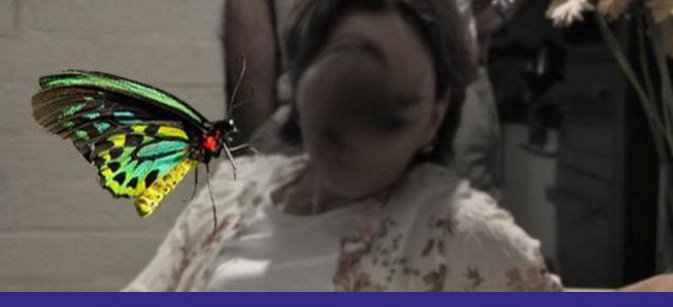

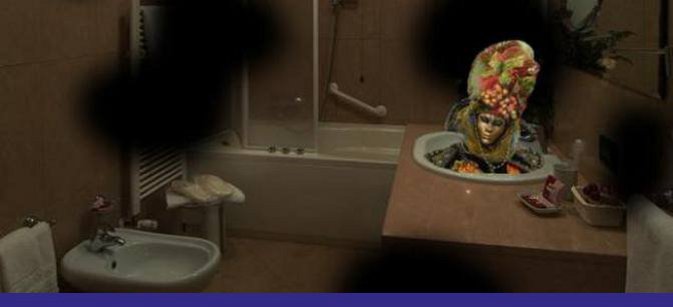
Over the past decade, the Charles Bonnet syndrome has had more public exposure and clinical journal coverage than ever before. Importantly, the personal accounts of people's lived experience of CBS is increasingly reaching radio airwaves as well as print and social media platforms. These are undoubtedly encouraging developments.
Yet the sobering reality is that on the ground in health care settings spanning hospitals, medical consulting rooms and community based services, CBS is being misunderstood or more commonly, overlooked altogether. We would like to briefly share two recent CBS stories that speak to this gap in service provision. One involves a young woman and another an octogenarian male.
Almost 3 years ago, a woman aged of 25, was diagnosed with glaucoma and prescribed anti-glaucoma eye drops. Around this time, she also began to have visions of text in various languages appearing on walls, floors or hovering mid-air.
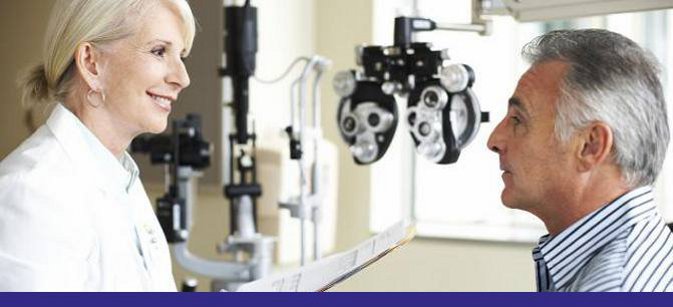
She was prompted to go to the emergency ward (ER) at her local hospital. It was there that she was diagnosed with ˜unspecified psychosis'. After this diagnosis, she sought further clinical help. First, she visited her eye specialist who informed her that her eyes were ok and could not therefore account for her visions. She subsequently sought help from multiple psychiatrists all of whom confirmed the ˜unspecified psychosis' diagnosis. Some prescribed antipsychotic medication to relieve her of her symptoms but none worked.
For nearly three years this scenario persisted. None of the specialists thought she had schizophrenia but so too none could explain her ongoing unusual visual experiences. And this powerful label - ˜unspecified psychosis' - made her feel very worried. It was only when she undertook an online search of the term ˜hallucination' that she first came across CBS. She read more and strongly felt this applied to her.

(Photo courtesy of Shridha Vashistha)
Case two. A man in his 80s had been diagnosed with the dry form of macular degeneration. He happened to mention some strange visions he had been having to his general practitioner whose curt reply was, I'd keep that to yourself if I were you. This made the man feel unsupported and stigmatised. The visions continued but he tended to withdraw. He thought he was going bonkers.
When he saw his macular specialist, he plucked up the courage to raise the topic once more. This time, the specialist indicated that he should be referred to a psychiatrist. The referral was made but the man opted not to go. Later, while attending an information session on macular degeneration, the topic of CBS was first raised. It was a liberating revelation for the man after having endured over two years of isolation, uncertainty and emotional distress.
Regrettably, these two cases are not isolated stories. Rather, they speak to a disturbingly common scenario encountered across the world. Still today, CBS doesn't seem to register amongst many health care professionals as a possible explanation for why someone is ˜seeing things'. The implications of this can be stark: misdiagnosis, being led down an inappropriate (medical) path and meanwhile the symptoms continue for the person with no understanding of what is actually happening to them.
The syndrome is (still) falling through the cracks of the health system. This most unfortunate situation will continue until and unless health care professionals are more aware of, and responsive to, CBS. Part of the responsibility falls upon the peak bodies (for general and specialist medicine, nursing, optometry etc.) to establish CBS clinical guidelines and share to all their members. Ideally, health peak bodies should go a step further by pushing - as much as is practically possible “ for these guidelines to be incorporated into members' everyday practice protocols.
Then - and only then - will CBS begin to receive the health attention that is so desperately needed.
Hailey Yuk was born and grew up in South Korea. At an early age, it was discovered that she had congenital cataracts in her left eye which limited her vision in that eye. Otherwise, she enjoyed a happy childhood.
At school, Hailey was passionate about art and particularly graphic design. This led her to follow her dreams and relocate to America to undertake a Fine Arts degree at the Maryland Institute College of Art (MICA). She was loving her course and fitting in seamlessly to life in a foreign country.
Then at the age of 22, Hailey was diagnosed with glaucoma. She then began to attend a nearby glaucoma centre and was prescribed anti-glaucoma eye drops. Sometime later, she started to experience pain in the eyes and it was uncomfortable to study under a reading lamp. Even so, her studies continued much as before.
One day at the age of 25, something most unusual occurred: Hailey began to see things that she knew were not really there. It began as light flashes and other simple forms of imagery such as black lines and drifting trails of white smoke (see below). Hailey became alarmed and wondered what was happening to her. She informed the glaucoma centre and was quickly seen by an eye specialist. The specialist was initially concerned that the flashes of light might be a symptom of retinal detachment. Yet he checked her eyes and found everything was in order. He told Hailey that her eyes were ok and was sent on her way. Yet this actually made Hailey more concerned because if it was not due to a problem with her eyes, then did this mean she was going crazy?
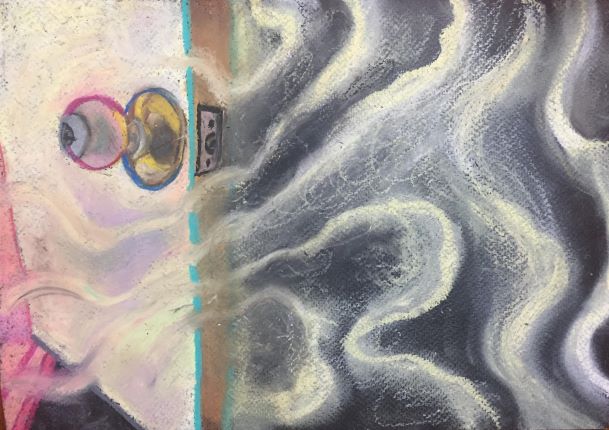
[Wispy, cloud-like smoke trails are clearly visible at the entrance to a room.]
Eventually, with prompting from others, she went to the emergency department (ED). Hailey was reluctant to go because she feared she would be pronounced insane. When Hailey spoke about the visions she was having, the ED team felt it was related to psychosis and this led to her being admitted to a psychiatric hospital. She was diagnosed with an unspecified psychotic disorder and remained there for a week before Hailey's parents organised to bring her home to Korea.
Upon returning to South Korea, Hailey faced two battles. The first was trying to understand what was causing her visions. The second was having to contend with her family believing that the phantom images she continued to experience were a sign of mental illness. And in Asian culture, mental illness carries significant stigma and shame. So these two matters were heavily weighing upon Hailey.
Over the next three years, Hailey saw five separate psychiatrists in an attempt to get to the bottom of what was wrong with her. Of the five, four believed she did not meet the requirements for a diagnosis of schizophrenia. Instead, she was diagnosed with unspecified psychosis. Each of these four placed her on antipsychotics but they never made any difference to her visions. The remaining psychiatrist felt her visions may be related to her vision impairment and suggested she did not need psychiatric medication and should just learn to live with the phantom imagery.
Since coming back to South Korea, Hailey had noticed that her visions had slowly begun to evolve. The simple forms of imagery were still there but now more complex forms were beginning to emerge. In particular, she was beginning to see formal text either on the walls or hovering mid-air. Sometimes the text was in English. Other times it was in Korean. And a third language would even appear before her eyes that she was not even able to read: Chinese. With the visions taking more elaborate forms, this was adding to Hailey's fears that she really was descending into mental chaos.

[Hailey's personalised CBS version of ˜The Scream'.]
The unlikely turning point for Hailey came at the age of 28. After three years of living with the phantom visions and still no clear answers coming from any of the psychiatrists, she one day typed into the search engine the word ˜hallucination'. One of the first entries to appear was a book written by the neurologist, Oliver Sacks entitled, Hallucinations. She ended up getting the book; the first chapter was specifically on Charles Bonnet syndrome. It was upon reading this chapter that some clarity and calm started to come to her. Hailey could personally relate to what Sacks was describing about the syndrome and felt that finally something was directly speaking to her.
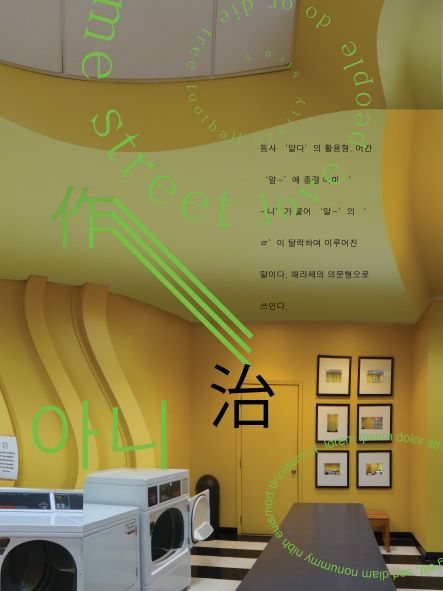
[A mixture of English and Korean script hovers in the office space.]
Since then, she found the CBS Foundation and joined the online community. She finally discovered others going through similar unusual visual experiences and no longer felt alone.
One important fact she came to learn from the Foundation was that certain glaucoma eye drops have a known history of triggering a range of side effects such as eye pain and a host of visual disturbances including hallucinations (or visions). When Hailey subsequently passed on this medical information to her doctor, he agreed that she stop taking the drops and an alternate set of drops was suggested. Since then, the eye pain has resolved and she has noticed that the frequency of her visions has considerably fallen.
This indicated that both her vision impairment and her prescribed eye drops were playing a role in her CBS symptoms. With the removal of the offending eye drops, the visions are now at a manageable level. And incredibly, she has actually come to like her visions. This is a dramatic turnaround for Hailey as for a long period of time she didn't like them at all. For her, they were strongly associated with her worst mental health fears.
Hailey is now entering a far better space: less alone and far less fearful. Her parents have noticed this positive change in her outlook since she came to know of the Bonnet syndrome. She even began to artistically express her unusual visual experiences, which has proven to be therapeutic. A selection of these art works are featured within this article. The positive responses she has been receiving to these works is fuelling her desire to return to her former life in Baltimore, USA. Hailey intends to complete her Fine Arts degree and ultimately pursue an artistic career. We wish Hailey well in her endeavours.
It is known that about 10 -15% of all people living with CBS will experience Bonnet images of text similar to Hailey's. The range of text can be quite wide: from letters, words, numbers and symbols through to other forms of notation such as musical scores or mathematical formulae. Hailey's work skilfully captures this aspect of text imagery infiltrating her visual field.
One of the most clearcut understandings of the Charles Bonnet syndrome is that it is linked to vision loss. However, as with many aspects of the syndrome, things are not as straight forward as they seem.
The neurologist who named the syndrome in honour of its discoverer, Charles Bonnet, argued that vision loss was not a requirement for CBS. Yet despite this, almost everyone today recognises that there is a strong connection between CBS and acquired vision loss. In fact, CBS is quite often reduced to this simple understanding: if you are 'seeing things' and have experienced sight loss then it must be Bonnet syndrome.
But even though it is now widely held that vision loss is a crucial factor in developing the syndrome, it has not been agreed how much vision loss is required for CBS to occur. And due to this, some misunderstandings have crept in. A common misunderstanding is that only those with very significant vision loss can develop CBS. Some eye specialists have even been known to say to patients that they can't have CBS because:
None of these comments are actually true. CBS does occur in cases of mild to moderate vision loss. And can result from any form of eye disease or injury.

At this point in time, there is no agreement among researchers or those in the medical community.
The Foundation's present understanding is that CBS can even occur in mild to moderate cases of vision impairment. And that as vision continues to drop further, the chances of developing the syndrome increases. Some even develop the syndrome only after they have lost all perception of light. That's quite a wide range.
It's been a significant couple of months in Australia as the country comes to grips with the enormity of two pressing matters: sexual assault and misogyny allegations within (and beyond) federal parliament as well as the very sobering findings of the Royal Commission into Aged Care. What connects the two issues is an eerie parallel story of widespread abuses (historical and contemporary) that have tended to remain largely concealed from public and media attention.
Yet what once remained in the murky depths is now beginning to be brought to the surface. And in this sense, the issues of sexual assault and aged care abuse/neglect have relevant messages for the Charles Bonnet syndrome cause too. When previously unheard voices begin to receive substantial coverage in the public arena, then this opens up a more nuanced picture of the way of things. It can challenge the status quo, the way things have been. It compels us as a society to take notice and ask whether this is a fair and just state of affairs. If not, then implementing change in the interests of human dignity and respect becomes crucial.
The interminable silence that surrounds CBS has kept the matter far from public awareness. More concerngly though, the syndrome remains poorly understood even within medical and health care settings. People living with CBS have been left behind. Services are often oblivious to them. So the long, tortuous road of isolation, distress and uncertainty persists (often unnecessarily) for many vision-impaired people.
It's high time for the voices within the CBS community to be publicly heard and recognised. Pressure needs to be brought to bear upon health services to be far more responsive to this remarkably frequent condition. Make no mistake, Charles Bonnet syndrome is pervasive. And despite its characterisation, it's not always pleasant. In fact, sometimes it's downright awful. It can be scary too and negatively affects the quality of a person's life.
Until and unless the medical and health care sectors are confronted with the stark reality of how devastating and common the syndrome is, they will seemingly not be moved to act. Because where silence reigns, there's rarely change.
The Charles Bonnet Syndrome Foundation is dedicated to raising awareness of CBS, what signs to look out for and how to better manage this condition.
As a charitable organisation, we rely principally upon memberships and donations to continue our work.
Please help us to support more people affected by CBS.
