
A vision-impaired
person of sound mind experiences
phantom images (visions) in
their visual field.
National helpline
1300 121 123

A vision-impaired
person of sound mind experiences
phantom images (visions) in
their visual field.
A recent paper from Denmark has undertaken the first attempt to estimate how prevalent CBS is in the world. Published in the Annals of Eye Science journal, their meta-analysis concluded that 19.7% (1 in every 5 people) who experience vision loss will develop CBS. They draw upon this percentage to estimate a global figure of 47.2 million people affected by the syndrome.
Perhaps, just perhaps, this sobering finding will be the wakeup call for the health care sector to start to take the syndrome seriously. For far too long CBS has been downplayed and even neglected by a wide range of medical and health care professionals.
In the editorial section of the journal, it states:
The number of low vision patients that suffer from visual hallucinations is shockingly large¦ The first step in addressing CBS is the recognition by ophthalmologists that this condition is highly prevalent in our patient population.
They issue a challenge to ophthalmologists: to ask their patients whether they see things that they know are not really there. They conclude: The number of patients that may answer your question with a ˜yes' may surprise you."

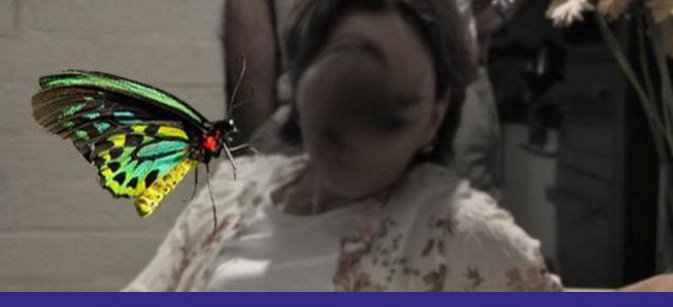
[Image courtesy of Nick Decorte]
The Foundation welcomes this development as it speaks to the enormity of the situation. The estimate of 47.2 million people affected globally by CBS may even be conservative on two fronts. First, their study only applies to people over the age of 40 and yet we know younger populations are affected. Second, the study suggests 1 in 5 people will develop CBS yet there are many studies indicating that 1 in 3 may be more accurate.
REFERENCE:
Subhi et al (2022). Prevalence of Charles Bonnet syndrome in low vision: a systematic review and meta-analysis. Annals of Eye Science; 7: 12.
The Association for Research in Vision and Ophthalmology (ARVO), which was founded nearly 100 years ago, recently held its annual meeting in Denver, May 2022. At this meeting, two separate studies were shared: both exploring the effects of COVID-19's restrictions on people's lived experience of Charles Bonnet syndrome (CBS).
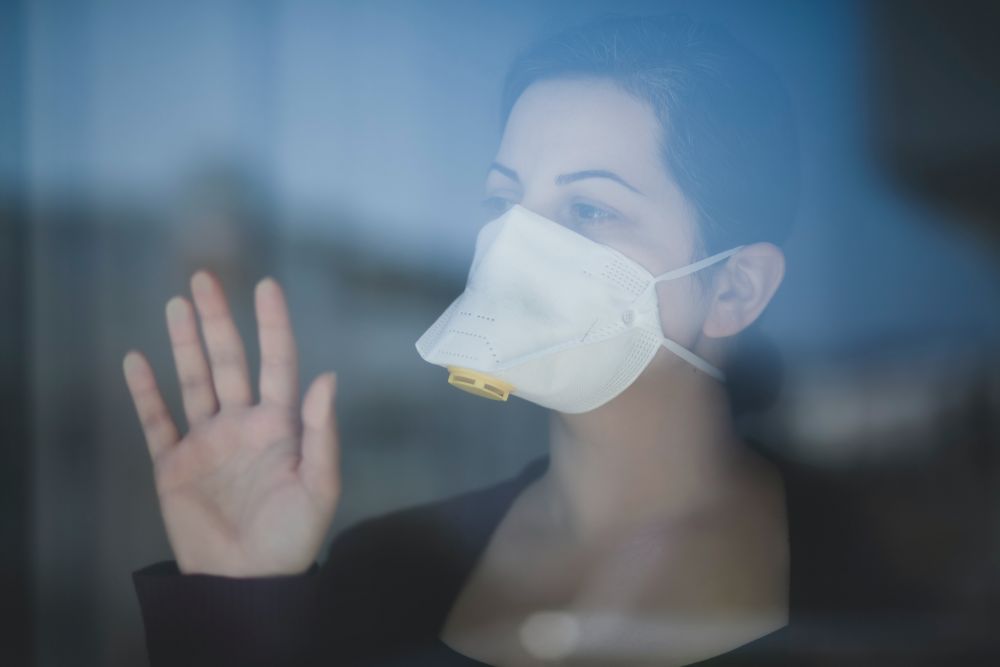
It is known that disruption to social opportunities and various activities of life can have an adverse effect on a person living with CBS. Multiple lockdowns from a pandemic would therefore seem ripe conditions for many people's life quality to decline. Indeed, one study from the UK exploring the experiences of vision-impaired military veterans during the pandemic discovered that approximately half of the veterans had noticed a worsening of their CBS symptoms. This was, in part, attributed to an increased sense of loneliness. This seems an unsurprising finding.
Yet, at this very same ARVO meeting, another group of researchers from Canada found that 90.6% of their sample reported no change in the duration of their CBS since the onset of the pandemic. They also found that there were no significant differences in anxiety, social isolation or loneliness levels. In this Canadian study, their overall finding was that the social restrictions due to COVID-19 had not negatively affected their patients' CBS experience.
(Image courtesy of Önder Örtel)
These contradictory findings are quite intriguing. It would appear to make sense that the dramatic effects of multiple lockdowns (eg. being unable to have direct contact with family members and friends, life activities becoming inaccessible) would have a harmful effect on people's quality of life and in turn on their CBS. Yet the fact that one study has found that the COVID-19 restrictions had little, if any, effect on their patients' CBS - let alone anxiety and loneliness levels - seems counter-intuitive.
However, the Canadian researchers from this 'no-effect' study conclude that the principal issue is not about psychosocial factors but rather an overactive brain (specifically, the visual region of the brain). So they view an internal factor (ie. overactive visual brain) as being far more important than the onset of a pandemic and its related social restrictions. In this sense, these differing results may reflect the seemingly unending debates about the degree to which biology versus environmental factors shape us as human beings.
The significant issue with the phrase "seeing things" is that it is almost exclusively equated with mental illness or dementia. It's a terrifying thought and for which most dread hearing. No one wants to be cast adrift as having 'lost their marbles'.
Yet, Charles Bonnet syndrome (CBS) represents a notable exception: people are truly seeing things that are not there but there's actually little - if anything - wrong with their mind. And this is what people with vision loss desperately need to know and hear: that despite the unsettling experience of 'seeing things' that they do retain their marbles.
In the world of Bonnet syndrome, just about every possible visual image imaginable has been reported. The scope of content is enormous. There are some common visual categories that appear but no one is assured of any particular forms. CBS phantom images can be divided into two types: simple and complex.
Simple:
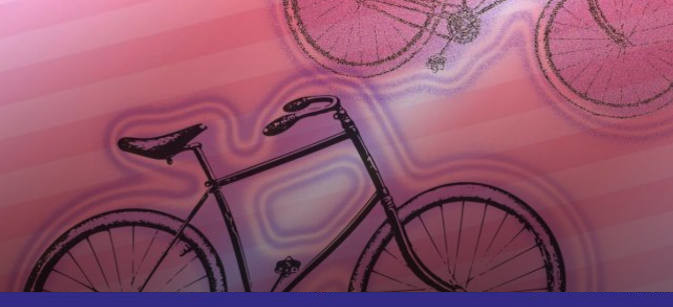
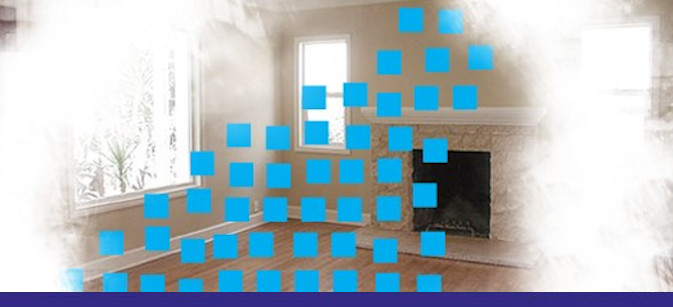
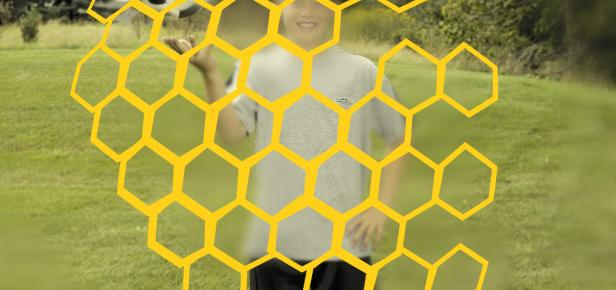
This includes elementary forms such as rows of dots, horizontal lines, small stars, snowflakes, a flame, fireworks of rich colours, a single colour, non-descript blobs, chequerboards, brick walls, geometric patterns, netting, wallpaper designs, spirals, a spiderweb, honeycomb pattern.
Complex:
More structured images of objects, figures and landscapes.
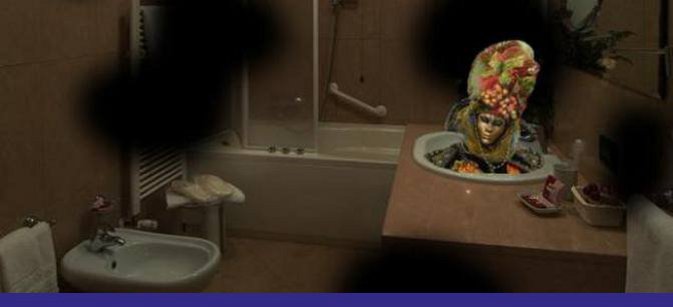
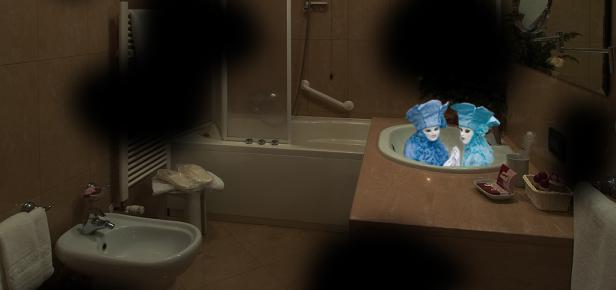
This includes: plants/trees, human figures, disembodied faces, masses of people marching, animals, buildings, buses, ships, furniture and even extending to full, panoramic views (eg. a beach scene). Usually the formed images are slotted into the real immediate environment: for example, a human-like figure with a bizarre hat is seen in the person's actual bathroom.
Many with CBS experience simple forms to begin with. Over time, these simple forms can transition into more complex visual types. This is a trend noted for a significant number of those experiencing CBS. However, some will only ever experience elementary visions while others only encounter the more complex forms such as objects, people or animals.
The greatest risk factor for CBS is the existence of some form of eye disease or eye injury. The more significant the loss of vision, the more prone one is to the syndrome. It is well established that CBS is associated with the major eye diseases of macular degeneration, cataracts and glaucoma. Yet, even more telling, there is virtually no eye condition that seems to be immune from this susceptibility. CBS has been known to occur from damage to the cornea (outer part of the eyeball) and even with a retinal prosthetic being implanted.
Vicky Hamilton is a PhD student at Griffith University in Queensland, Australia. You may have noticed some of her pictures and short video were featured in a previous story here on after-images (palinopsia). Vicky's research is looking into the possible role that one's thoughts play in CBS visions.
What makes this study different is that Vicky herself lived with CBS for many years. She had an aneurysm pressing into her optic nerve that triggered her unusual visual experiences. CBS can be very hard to describe to others. Vicky is well aware of that from her own personal experience. Your (or a loved one's) input could be very helpful in Vicky's attempts to gain some insights into the CBS experience. Click the link below:
https://prodsurvey.rcs.griffith.edu.au/prodls200/index.php/514416?lang=en
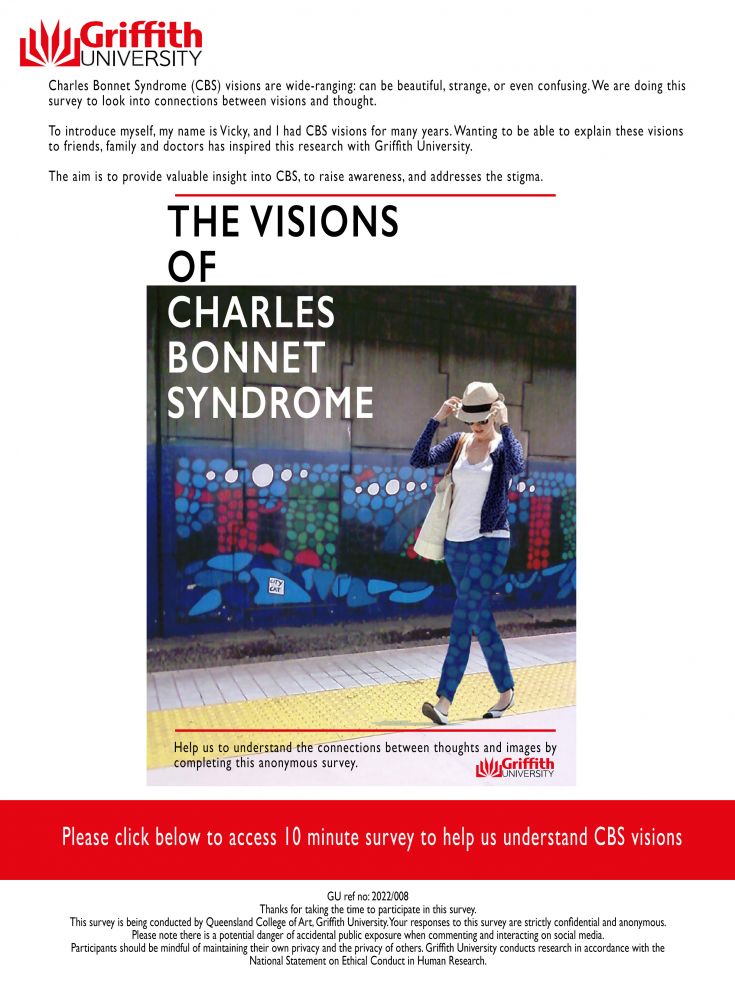
We warmly invite everyone living with CBS over the age of 15 (or their loved one who can speak on their behalf) to participate in Vicky's research. Click below to start the survey:
https://prodsurvey.rcs.griffith.edu.au/prodls200/index.php/514416?lang=en
The Charles Bonnet Syndrome Foundation is dedicated to raising awareness of CBS, what signs to look out for and how to better manage this condition.
As a charitable organisation, we rely principally upon memberships and donations to continue our work.
Please help us to support more people affected by CBS.
