
A vision-impaired
person of sound mind experiences
phantom images (visions) in
their visual field.
National helpline
1300 121 123

A vision-impaired
person of sound mind experiences
phantom images (visions) in
their visual field.
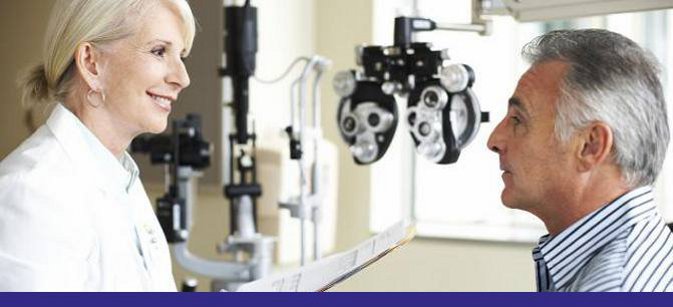
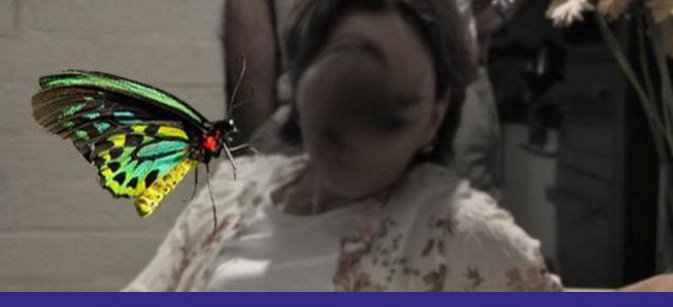


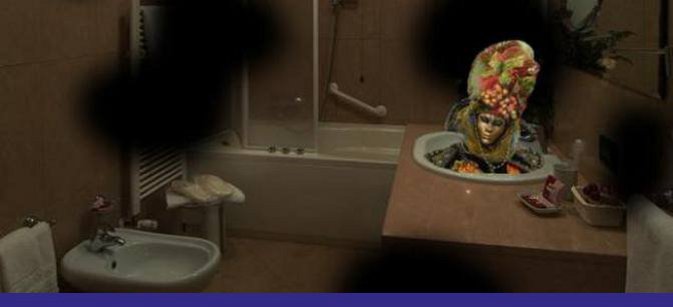


CBS IS NOT SOLELY AGE-RELATED
A new research paper from Germany has found that CBS also occurs in younger populations of the vision-impaired (ie. under 40 yrs of age) with two subjects as young as 18 and 21.
Even though it is certainly true that the majority of CBS cases occur in those of advanced years, it is important to stress that CBS can, and does, strike at any age. CBS in children as young as 6 or 7 has been reported over the years as well as documented cases occurring in early to mid adulthood.
When eye disease - or damage to the visual system - strikes anywhere along the lifespan, then the risk of developing CBS rises. This German study (Elflein et al, 2016) is one of the first to demonstrate that CBS is not simply an age-related condition. To read the capsule summary of the study, click here.
A recent article published online by WYZA (a clever website name targetted at - and for - older Australians) has drawn attention to CBS in their health section. It features testimonies of two Australians living with CBS. To read the full article, click here.
The Foundation welcomes any personal accounts of one's CBS experiences. The sharing of stories can help break the stigma and silence associated with this syndrome. As people living with CBS begin to learn that their experiences are quite common, it can encourage them to discuss their own CBS journey. In turn, this can assist to open up the public discussion of CBS.
It is only through people speaking up - and this includes carers, medical and allied health care professionals - that the syndrome can emerge from its slumber and take its rightful place in public awareness.
One of the world's most acclaimed neurologists, Dr. Oliver Sacks, has passed away at the age of 82. Most famous for his books, Awakenings (later to become a popular film) and The Man who Mistook his Wife for a Hat, Sacks became renowned for his ability to make unusual neurological conditions accessible to the general public. His distinctive flair with the English language -and empathy as a clinician - meant he brought charm, dignity and grace to his clinical stories.
Dr. Sacks also played an important role in raising awareness of Charles Bonnet syndrome (CBS). It could be argued that he - perhaps more than any other - managed to further the cause of CBS due to his sizeable mainstream reach. He presented a thoroughly engaging TED lecture on CBS in 2009 that eloquently captured the syndrome's facets. This can be viewed here.
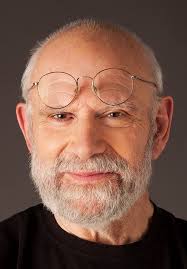
Further, in 2012, he published the book, Hallucinations, to which the first chapter was dedicated to CBS. Here are two excerpts from that work:
'Charles Bonnet syndrome was considered rare before 1990... I thought this strange, for working in old-age homes and nursing homes for over thirty years, I had seen a number of blind or purblind patients with CBS... I wondered whether CBS was actually much more commoner than the literature seemed to indicate. Recent studies have confirmed this is the case, although CBS is still little recognized, even by doctors, and there is much to suggest that many or most cases are overlooked or misdiagnosed.' (p. 10)
˜Occasionally people with CBS may hallucinate letters, lines of print, musical notes, numerals, mathematical symbols, or other types of notation¦ Sometimes the hallucinated text has an obvious association with experience, as with one man who wrote to me that he would see Hebrew letters all over the walls for about six weeks following Yom Kippur each year.' (p.13)
An Australian study, published in the journal American Academy of Ophthalmology, has found that one in three persons living with advanced retinitis pigmentosa (RP) had symptoms consistent with CBS (O'Hare et al, 2015).
This is the first known study specifically exploring CBS in relation to the RP condition and is a welcome addition to the overall CBS picture. The found prevalence rate of 37.5% is appreciably higher than most previous CBS studies. Even accounting for the fact that this study focused on RP at its advanced stage, the findings remain telling. Often erroneously labelled as a rare condition, perhaps the true prevalence rate of CBS is just starting to come to light. Consider too, that just two years ago, a large UK study found a CBS prevalence rate of 39% (Cox and ffytche, 2014).
Both these studies also found that roughly a third of all those living with CBS experienced distress or anxiety due to their symptoms, which counters the widely held belief that the syndrome is benign. With such prominent figures now emerging, it begs the question: how much longer can clinical disciplines continue to turn a blind eye to CBS?
REFERENCES
O'Hare et al (2015). Charles Bonnet Syndrome in Advanced Retinitis Pigmentosa. American Academy of Ophthalmology; 122(9):1951-1953.
Cox and ffytche (2014). Negative Outcome Charles Bonnet Syndrome. British Journal of Ophthalmology; 98(9):1236-1239.
Page 11 of 14
The Charles Bonnet Syndrome Foundation is dedicated to raising awareness of CBS, what signs to look out for and how to better manage this condition.
As a charitable organisation, we rely principally upon memberships and donations to continue our work.
Please help us to support more people affected by CBS.
